
Classes, Resources, Lessons

The Ultimate Guide to Learning Toys and Games for Home Educators

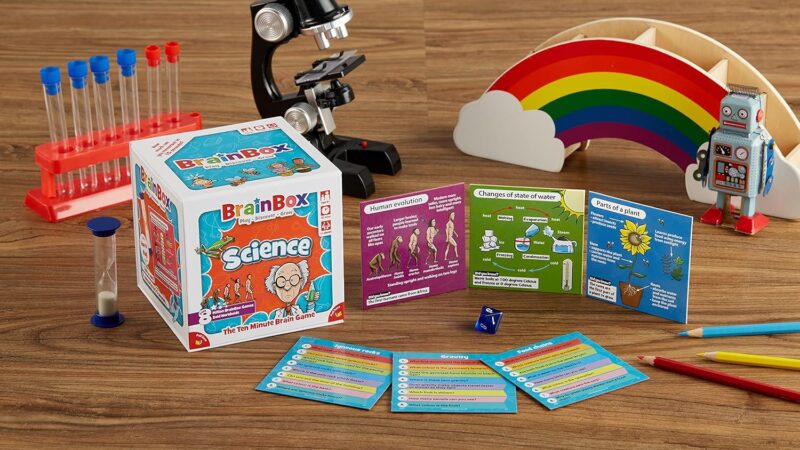
One of the greatest joys of home education is being able to choose resources that genuinely suit your child – not what fits a classroom of thirty. Whether you’re looking for hands-on science kits, educational games that don’t feel like work, or reference books your children will actually pick up and browse, this guide has you covered. We’ve pulled together our favourite home education resources across every subject area, all suitable for ages 6 and up. Every product here is available on Amazon, making it easy to build your home ed shelf without the hunt. This post contains affiliate links. If you purchase through them, we may earn a small commission at no extra cost to you — this helps us keep Home Education Circle running. Science and Nature Science is one of the subjects where home education really shines – you’re not limited to a whiteboard and a textbook. These resources bring science to life through models, experiments and exploration. Thames & Kosmos Human Body Anatomy Model Construct a realistic 37-piece human body model with an included stand and guidebook, providing hands-on learning about anatomy. Perfect for children ages 8+, this kit fosters curiosity about biology, health, and science through interactive play. View on Amazon Galt Toys Horrible Science Kits Tied in with the popular Horrible Science book series, these experiment kits cover everything from slime and germs to explosions and electricity. Genuinely engaging, with results children can see and feel. Suitable from age 8. View Building Box of Experiments on Amazon | View the whole Galt Horrible Science Box Range National Geographic Science Magic Kit Part magic, part chemistry – this kit introduces scientific concepts through experiments that look like tricks. Great for curious minds who need a hook before they’ll engage. From age 8. View on Amazon Thames and Kosmos Kids First Chemistry Set A well-designed starter chemistry set with safe experiments and a proper activity guide. Introduces concepts like acids, bases, reactions and states of matter in a structured way. From age 8. View on Amazon Snap Circuits Electronics Exploration Kit Build working circuits using snap-together components – no soldering, no mess, no frustration. Excellent for introducing electricity, logic and engineering thinking. From age 8. View on Amazon 4M Crystal Growing Kit Grow your own crystals and observe the process over several days. Simple, satisfying and genuinely educational. Works well as a patience-and-observation lesson as much as a science one. From age 10. View on Amazon Usborne Science Encyclopaedia A comprehensive reference book covering physics, chemistry, biology and earth science in Usborne’s accessible, illustration-rich style. One of those books that lives on the shelf and gets consulted regularly. From age 5. View on Amazon Maths and Logic Maths resources work best when they move away from the page. These picks build number sense, logic and problem-solving through play and physical manipulation. Cuisenaire Rods A classic manipulative used by educators worldwide. Colour-coded rods of different lengths help children understand number relationships, fractions, multiplication and more – without abstract symbols getting in the way. From age 5. View on Amazon Fraction Tower Cubes Interlocking cubes that visually demonstrate fractions, equivalence and percentages. Particularly useful for children who struggle to understand fractions abstractly. From age 6. View on Amazon ThinkFun Rush Hour Logic Game A sliding puzzle game with 40 challenges ranging from beginner to expert. Builds spatial reasoning and logical thinking without feeling like maths at all. A home ed staple. From age 8. View on Amazon Maths War Card Game A fast-paced card game that builds mental maths fluency through competitive play. Great for drilling number facts in a way children actually enjoy. From age 6. View on Amazon Sum Swamp Maths Game A board game that practises addition and subtraction through play. Particularly good for younger children in the 6–8 range who need to build confidence with basic operations. From age 5. View on Amazon ThinkFun Zingo Sight Words / Number Bingo A bingo-style game that reinforces number recognition, counting and early arithmetic. Quick to play, easy to set up and genuinely engaging for younger children. From age 6. View on Amazon Mathepotamia Maths Game A times tables and mental arithmetic game with multiple levels and modes, including a flashcard mode for quick practice on the go. Designed so children and parents can play together at their own level, making it easy to fit into family game nights as well as lesson time. From age 6. View on Amazon Literacy and Language These resources support reading, writing, vocabulary and storytelling – and most of them work across a wide age range. Bananagrams A fast-paced word tile game where players race to build their own crossword grids. Builds spelling, vocabulary and quick thinking. One of those games the whole family can play together. From age 7. View on Amazon Rory’s Story Cubes Nine dice covered in images – roll them and use the pictures to build a story. Brilliant for reluctant writers and creative children alike. Works across a huge age range and sparks imagination every time. From age 6. View on Amazon Boggle The classic word-finding game that’s been a favourite for decades. Competitive, fast and genuinely effective at building vocabulary and spelling awareness. From age 8. View on Amazon Usborne See Inside series Lift-the-flap non-fiction books covering an enormous range of topics – science, history, the human body, space and more. Excellent for building reading habit and general knowledge simultaneously. From age 6. View on Amazon Oxford Children’s Dictionary A reliable reference tool that earns its place on every home ed shelf. Encouraging children to reach for a dictionary rather than a screen builds both vocabulary and independence. From age 7. View on Amazon The Great Storytelling Game A Story in Every Round – Stretch those storytelling muscles! Players use picture cards to inspire fun, imaginative tales that build with every turn. From age 6. View on Amazon History and Geography Home education gives you the freedom to dive deep into history and geography

No Comments Read More
Free home education resources
Classes, Resources, Lessons

The Free Curriculum Resource Every Home Educator Should Know About

If you home educate in England, you will know the challenge of finding resources that are structured, trustworthy, and genuinely comprehensive – without costing a fortune. Oak National Academy ticks every one of those boxes, and it is completely free. Originally created in 2020 to help pupils keep learning during the pandemic, Oak has grown into one of the most complete curriculum platforms available in the UK. It covers every national curriculum subject from Early Years Foundation Stage all the way through to Key Stage 4, with every unit and every lesson in one place. For home educating families, it is the kind of resource that can form the backbone of your entire education plan. What Is Oak National Academy? Oak National Academy is a government-funded education platform built to help anyone responsible for a child’s learning – including home educators – access high-quality, curriculum-aligned resources at no cost. There are no subscriptions, no paywalls, and no hidden fees. It was funded by the Department for Education and always will be free. Every lesson and unit on Oak is created by subject specialists and curriculum experts, grounded in evidence of what actually works, and tested by experienced teachers before being published. You do not need to be a qualified teacher to use it effectively – Oak provides the subject expertise, and you provide what you already have: the relationship with your child and the understanding of how they learn best. Coverage From EYFS to GCSE One of the biggest practical challenges for home educators is finding resources that grow with your child – especially as subjects become more complex at secondary level. Oak solves this completely. Whether your child is in their first years of learning or preparing for GCSEs, Oak has full coverage: For home educators supporting children through GCSEs outside of a school setting, the Key Stage 4 resources are particularly valuable. Having structured, expert-built lesson sequences aligned to the national curriculum gives your child the same rigorous foundation that school pupils receive. Flexible by Design – Perfect for Home Education Oak is built around a simple principle: its materials are tools to adapt, not scripts to follow. That philosophy fits home education perfectly. Every family home educates differently. Some follow a structured timetable that mirrors a school day. Others take a more relaxed, child-led approach. Many fall somewhere in between. Oak works for all of these approaches because it gives you complete control over how you use it. Pick up a single lesson when you need to cover a specific topic. Work through a full unit from start to finish. Use Oak as your main curriculum framework or dip in to fill gaps alongside other resources. There is no right or wrong way to use it. No More Piecing Together Resources From Everywhere Ask most home educators what takes up their time, and sourcing materials will be near the top of the list. Finding reliable resources across every subject, every year group, and every topic – and checking they are actually accurate and well-structured – is exhausting. Oak removes that burden. Every subject. Every unit. Every lesson. All in one place, all free, all created by specialists. Instead of spending hours searching, you can spend that time actually teaching. AI Tools to Make Planning Easier Oak also offers AI-powered tools through its labs environment that allow lessons to be created, adapted, and personalised quickly. For home educators managing several subjects, multiple year groups, or children with different learning needs, these tools can save significant time while keeping quality high and content safe. Keeping Up With Curriculum Changes Oak is currently working with education experts to update all of its resources in line with England’s revised national curriculum and updated GCSEs. For home educators who use the national curriculum as their framework – as many do – this means Oak will stay current and relevant as things change, with guidance provided along the way. Completely Free, Always For home educating families who fund everything themselves, cost matters. Curriculum packages, workbooks, online subscriptions and tutoring add up quickly. Oak is funded by the Department for Education and will always be free — no tiers, no trials, no paywalls. A complete, expert-built resource that costs you nothing. Where to Start Head to thenational.academy and browse by key stage and subject. You can explore lessons and units without even needing to create an account. Signing up to the free newsletter also keeps you updated as new resources and curriculum guidance are released. Whether you are just starting out with home education or have been doing it for years, Oak National Academy is one of the most practical, reliable, and genuinely useful tools available to you – and it will not cost you a penny. Source: Oak National Academy

1 Comment Read More
Beamish Museum Home Educators' Day
Classes, Resources, Lessons

Beamish Museum Home Educators’ Day: Immersive History for the Whole Family

Next date: 15 September 2026 Beamish, County Durham, DH9 0RG Admission required (pass/day ticket); under 5s free If you’re looking for a home education day out that goes well beyond a standard museum visit, Beamish is hard to beat. Set on a 350-acre site in County Durham, Beamish is an open-air living museum that brings the history of North East England to life — and on their dedicated Home Educators’ Days, the whole experience is tailored specifically to home educating families. Rather than browsing alongside school trips, you’ll find a quieter museum where no other educational institutions have been booked in, giving your family more space to explore at your own pace. Add in a programme of bookable workshops and free drop-in activities, and it makes for a genuinely immersive day of hands-on learning. What Is Beamish Museum? Beamish is one of the UK’s most distinctive museums. Instead of objects in glass cases, it recreates entire historic environments that you can walk through, interact with, and explore. The site spans several distinct areas covering different periods of North East history: 1820s Pockerley — a Georgian manor house and working waggonway The 1900s Town — a recreated Edwardian high street with shops, a pub, a school and a dentist The 1900s Pit Village — a colliery, miners’ cottages and a Methodist chapel The 1940s Farm — a working wartime farm with animals and period equipment The 1950s Town — a postwar high street and housing 1950s Spain’s Field Farm — a smallholding from the same era Costumed staff bring each area to life, whether that’s chatting with a 1900s shopkeeper, watching a blacksmith at work, or learning about wartime rationing on the farm. For home educators, the breadth of topics covered — history, science, geography, citizenship, agriculture — means it’s easy to connect the visit to your curriculum. What Makes Home Educators’ Days Different? On Home Educators’ Days, Beamish does not take bookings from schools or other educational institutions. The museum remains open to general visitors and coach parties, but in practice it tends to be noticeably quieter, with none of the large school groups that can make popular exhibits feel crowded. Alongside the usual freedom to explore the site, the days include a dedicated programme of bookable workshops and free drop-in activities designed specifically for home educating families. Workshop content varies between dates, so it’s worth checking the specific event page for whichever date you’re planning to attend. The museum is also open to suggestions — if there are particular topics or areas of interest your group would like to see covered in a future Home Educators’ Day workshop, they actively encourage you to get in touch. Upcoming Dates The confirmed Home Educators’ Days for 2026 are: Tuesday 15 September 2026 — booking available closer to the date Wednesday 2 December 2026 — booking available closer to the date Sign up to the Beamish Home Educators’ Day mailing list to be notified when booking opens for each date, and keep an eye on their website and social media pages for updates. What’s On: Workshops and Activities Each Home Educators’ Day includes a mix of bookable workshops (individually priced) and free drop-in activities around the museum site. The specific programme varies between dates — here’s a flavour of what has been available based on the current programme: Free drop-in activities As well as the bookable sessions, there are free drop-in activities running throughout the day across the museum site. These are included with museum admission and do not need to be booked in advance. If an activity is busy when you arrive, museum staff can advise on the best time to come back. Admission and Booking Places on Home Educators’ Days must be booked in advance — you cannot turn up on the day without a booking. Admission options are: Beamish Unlimited Pass — covers museum entry free of charge for the whole year. Additional workshop costs still apply. Friends of Beamish membership — also covers entry free of charge. Special day ticket — available for those without a pass or membership, priced specifically for Home Educators’ Days. Under 5s — free entry. Workshops must be booked and paid for in advance. Parental supervision is required throughout all activities. To book, visit the Beamish Home Educators page or call 0191 370 4000. You can also email the Learning team at learning@beamish.org.uk or bookings@beamish.org.uk with questions ahead of your visit — note that staff work across a seven-day pattern with many part-time, so allow a little time for responses. Good to Know Before You Go The museum is large — 350 acres — so comfortable footwear is a must. Allow a full day. Some exhibits, transport routes and footpaths may be closed on any given day for operational reasons, so flexibility helps. Check the blackboard at the Main Entrance on arrival for the day’s updated information. If exhibits are busy when you visit, staff can suggest the best time to return rather than waiting around. The Beamish Unlimited Pass is genuinely good value if you’re likely to visit more than once — it covers entry for a full year and pays for itself quickly. If you have a home ed group or network and would like to discuss future workshop topics, the Learning team welcomes ideas. Getting There Beamish Museum is in County Durham, postcode DH9 0RG. From the north or south: Follow the A1(M) to Junction 63 (Chester-le-Street), then the A693 towards Stanley for four miles, following the Beamish signs. From the west: Take the A68 to Castleside near Consett, then follow signs along the A692 and A693 via Stanley. By bus: Service 28 runs from Newcastle city centre, Gateshead, Birtley, Ouston and Chester-le-Street. By car: Electric vehicle charging points are available in the Entrance car park. The museum is open daily 10am–5pm (seasonal variations apply — check the website before travelling). Find out more and book: Beamish Museum Home Educators’ Days   Planning your home ed year? Discover home

No Comments Read More

Sign In

Register

Reset Password

Please enter your username or email address, you will receive a link to create a new password via email.

Join our Waitlist

Join us inside the Circle and get instant access to a growing hub of resources, uplifting community, and empowering inspiration.

​
We will email you as soon as we go live!

    Which Circle are you interested in?
    Add me to Newsletter
    We respect your privacy. Unsubscribe at any time.