Halloween is a brilliant opportunity to bring a little creativity, curiosity and fun into your home education.
From spooky stories and pumpkin maths to science experiments, nature walks, baking and crafts, there are countless ways to explore learning through Halloween.
And you don’t need expensive resources, complicated lesson plans or a perfectly organised timetable.
Sometimes all you need is a pumpkin, a few craft supplies and a child with a question!
Here are some of our favourite Halloween home education activities to try this autumn.
1. Write a spooky story
Halloween is perfect for encouraging children to use their imaginations.
Start with a simple story prompt:
“I opened the door and saw…”
Then let your child decide what happens next.
You could also:
- Invent a spooky character.
- Create a monster fact file.
- Write a Halloween poem.
- Make a comic strip.
- Write a recipe for a magical potion.
- Create a homemade Halloween book.
- Tell a story together, with everyone adding a sentence.
Younger children don’t have to write the story themselves. They could draw the pictures and tell you what is happening while you write their words down.
Older children might enjoy experimenting with descriptive language, dialogue, characters and different genres.
The important thing is that there are lots of ways to develop literacy without sitting down with a worksheet.
2. Have some spooky maths fun
Halloween provides plenty of opportunities for practical maths.
Try counting pumpkins, bats or spiders, creating patterns, sorting objects or comparing sizes.
You could also try:
Pumpkin maths
Before opening a pumpkin, ask your child to estimate how many seeds are inside.
Then count them together. How close was their estimate?
Halloween shop
Set up an imaginary Halloween shop and give everything a price.
Children can practise adding amounts, counting money and working out change.
Spider maths
Draw spiders and create addition or multiplication problems using their legs.
Potion measuring
Use cups, spoons and containers to explore volume, capacity and measurement.
The same activity can easily be adapted for different ages.
3. Try a spooky science experiment
Halloween and science make a surprisingly good combination!
Explore shadows
Grab a torch and experiment with shadows.
What happens when you move the torch closer to an object?
What happens when you move it further away?
Can you make a tiny spider become a giant spider?
This is a simple way to explore light, shadows, distance and perspective.
Does a pumpkin float?
Make a prediction before putting a pumpkin into water.
Will it float or sink?
What about a smaller pumpkin?
What about a piece of pumpkin?
Encourage your child to make a prediction, observe what happens and explain their thinking.
Make a bubbling potion
A mixture of bicarbonate of soda and vinegar creates a fun fizzy reaction.
Add some food colouring and give your experiment a suitably spooky name!
Talk about what happens when the ingredients are mixed and encourage children to predict what might happen before you begin.
Always supervise children during experiments and choose materials and activities that are suitable for their age.
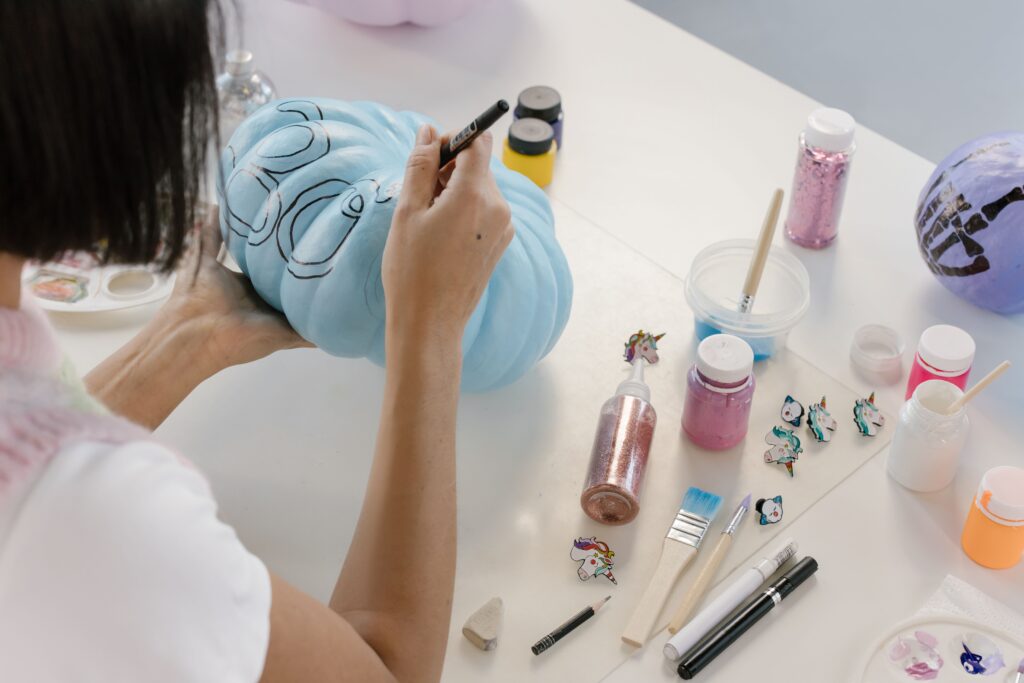
4. Get creative with Halloween art
Halloween is a great excuse to get messy and creative.
Try making:
- 🦇 Paper bats
- 👻 Spooky silhouettes
- 🎃 Pumpkin pictures
- 🕷️ Monster masks
- 🧙 Halloween bunting
- 🍂 Autumn collages
- 👹 Monster puppets
- 🧟 Recycled-material creatures
One of our favourite activities is design your own monster.
Give children cardboard, paper, tubes, fabric scraps and other craft materials.
Then ask:
What does your monster look like?
Where does it live?
What does it eat?
Does it have any special powers?
A simple craft can quickly become storytelling, problem-solving, design and imaginative play.
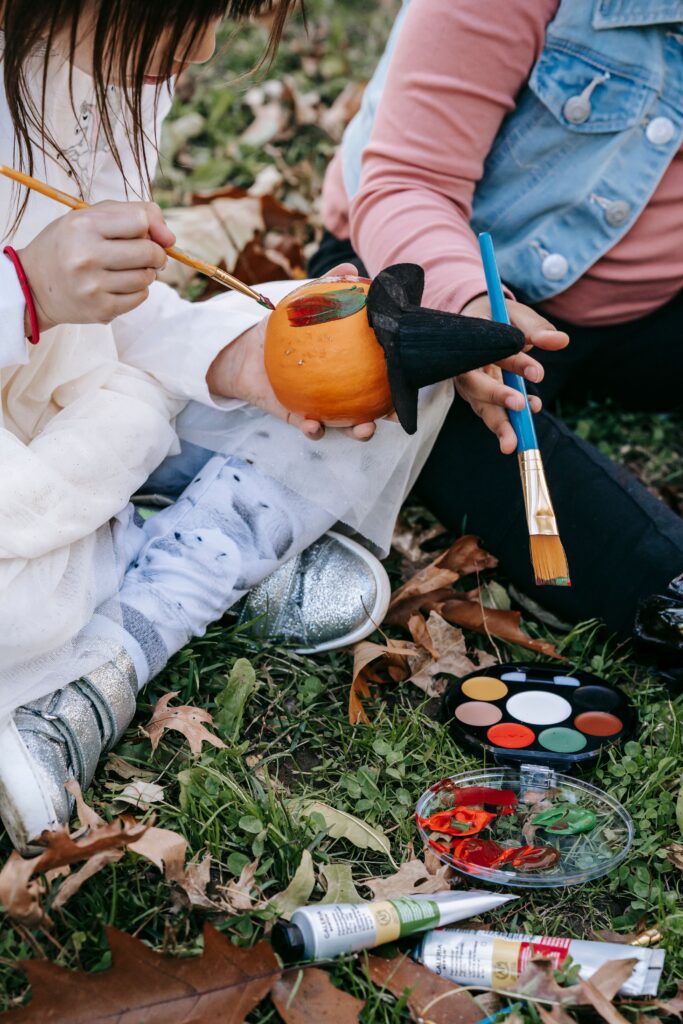
5. Take your learning outside
Halloween doesn’t have to mean staying indoors.
Autumn is a wonderful time to explore nature.
Go for a walk and look for:
🍁 Different coloured leaves
🌰 Conkers
🕸️ Spider webs
🌿 Interesting sticks
🪵 Textured bark
🍄 Fungi
🐦 Birds and other wildlife
You could create a Halloween-themed scavenger hunt.
Can you find something rough?
Something red?
Three different types of leaves?
A stick shaped like a letter?
Something that could belong in a witch’s spell?
Take photographs of your discoveries or draw them when you get home.
Just remember not to touch or pick unknown plants or fungi.
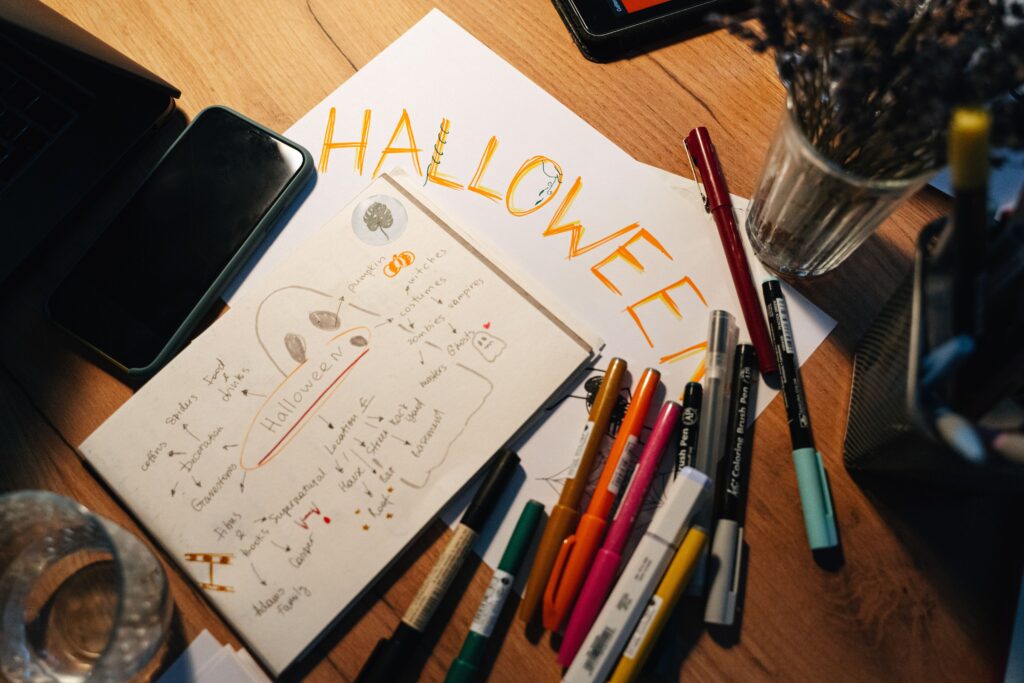
6. Discover the history of Halloween
Halloween can lead to some fascinating history and cultural learning.
Explore questions such as:
- Where did Halloween originate?
- Why do people carve pumpkins?
- Where did trick-or-treating come from?
- Why do people dress up?
- How have Halloween traditions changed?
- How do different countries celebrate?
Your child could turn their research into a timeline, poster, presentation, story or piece of artwork.
It’s also interesting to compare Halloween traditions around the world and discuss how celebrations differ between cultures.
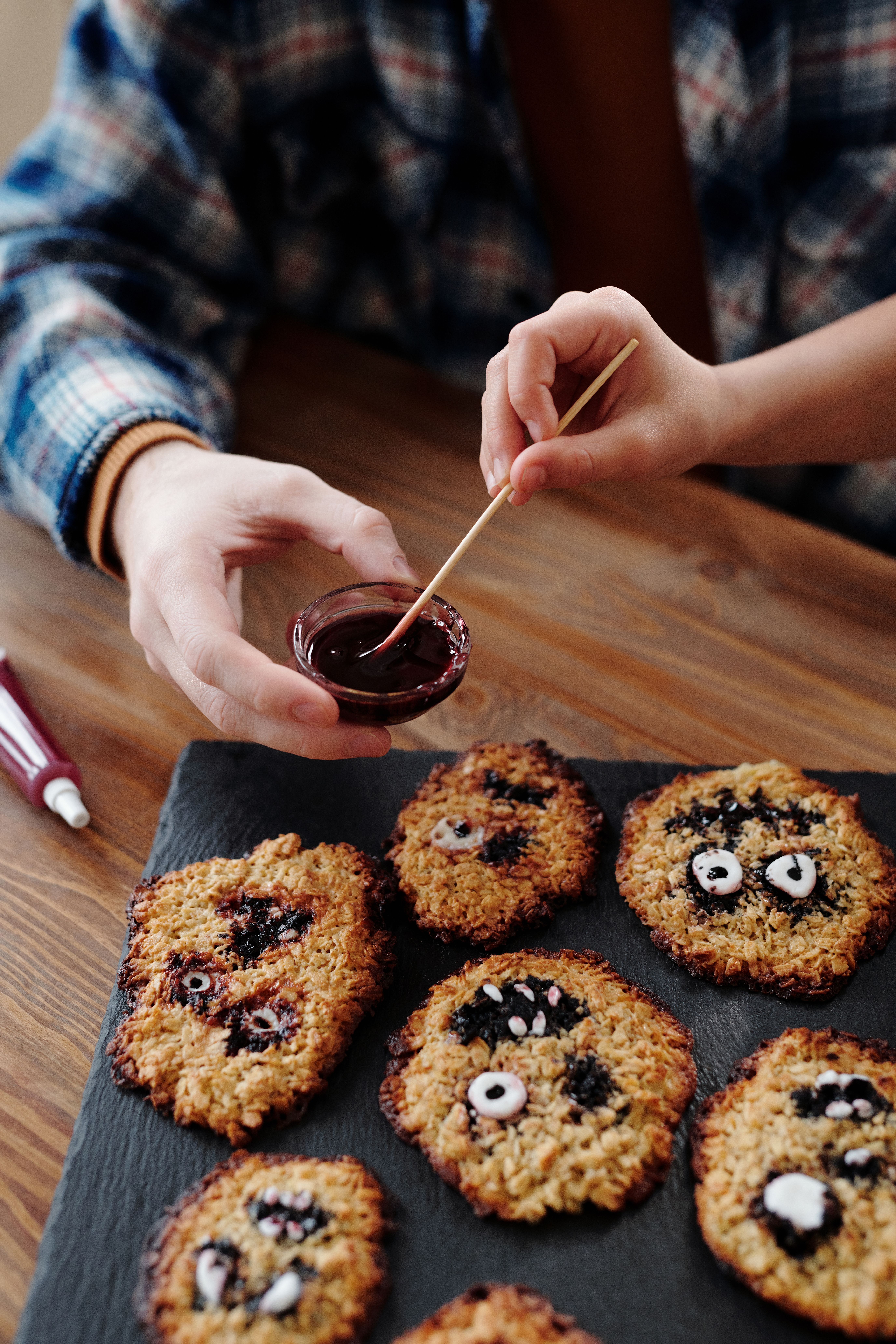
7. Bake something spooky
Baking is brilliant home education.
Make Halloween biscuits, cupcakes, pumpkin bread or another seasonal recipe together.
Along the way, you’re practising:
Reading – following the recipe
Maths – measuring and weighing
Fractions – halves, quarters and quantities
Science – ingredients and how they change
Sequencing – following instructions in the correct order
Life skills – kitchen safety and independence
Younger children can help pour and mix.
Older children might read the recipe, measure ingredients independently or work out how to double or halve the quantities.
And taste testing is obviously an essential part of the curriculum. 😉
8. Create a Halloween sensory activity
A Halloween sensory tray can be adapted for different ages and interests.
You could use materials such as dried pasta, rice, leaves or shredded paper, along with age-appropriate Halloween objects.
Children can explore textures, find hidden objects, sort items and create patterns.
Older children could even design their own sensory “witch’s potion” using safe materials.
Sensory activities can also provide opportunities for descriptive language:
Is it smooth or rough?
Soft or hard?
Heavy or light?
What does it feel like?
9. Follow their interests
Perhaps the most important Halloween learning idea is also the simplest:
Follow your child’s curiosity.
If they become fascinated by spiders, explore spiders.
Read about them.
Draw them.
Count their legs.
Find out how they make webs.
Look for webs outside.
Make a giant spider from cardboard.
Write a spider story.
One interest can lead naturally into science, literacy, maths, art and outdoor learning.
That’s one of the lovely things about home education — you can follow those little sparks of curiosity instead of worrying about fitting everything into a timetable.
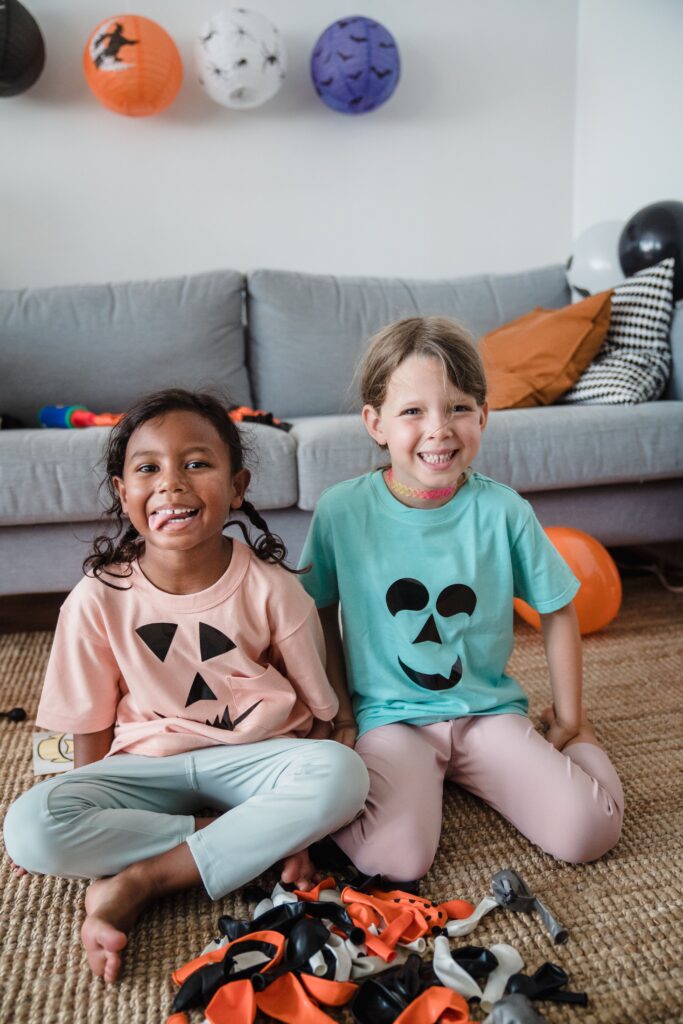
And remember: it doesn’t all have to be educational
It’s okay to have fun just because it’s fun.
Watch a Halloween film. Our favourite is Hocus Pocus, the first one. And Nightmare before Christmas!
Dress up.
Decorate the house.
Eat some Halloween treats.
Read a spooky story under a blanket.
Go for an autumn walk.
Play games.
Make a ridiculous monster and laugh about it.
Not every experience needs a learning objective attached to it.
Children learn through play, conversations, relationships, everyday experiences and exploring the world around them.
So this Halloween, don’t worry about creating the perfect home education plan.
Follow the fun. Embrace the mess. Ask questions. Be curious.
And see where your children’s interests take you. 🧡
What are you doing for Halloween?
We’d love to hear what your home education looks like this Halloween.
Share your ideas with the Home Ed Circle community, on Instagram, Facebook and inspire another home educating family!
Happy Halloween!
Linsey x
Comments